Snorly vs Pillow: Snore Recorder or Apple Watch Tracker?
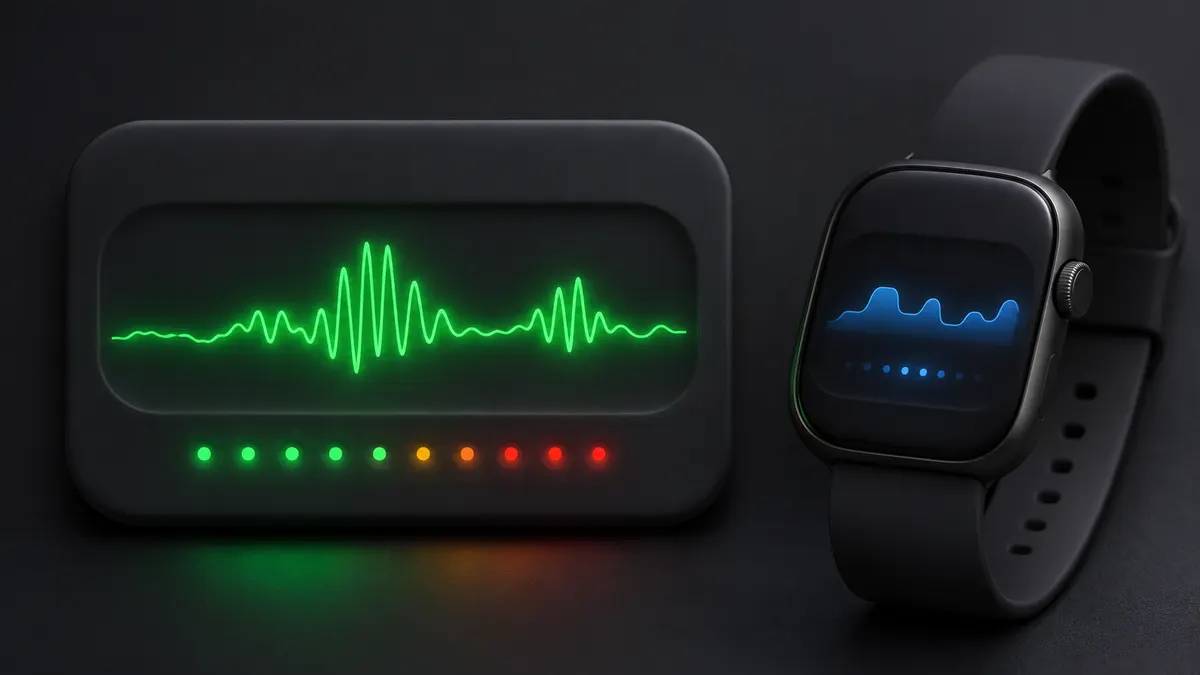
Pillow and Snorly both record snoring on an iPhone, but they start from different questions. Pillow is a sleep tracker built around the Apple Watch: stages, heart rate and a smart alarm, with sound recordings as a Premium feature. Snorly only records snoring, sleep talk and coughs, and it plays every clip back for free. Pick Pillow if you sleep with a Watch and want a full sleep report. We make Snorly, so read this as one side's comparison.
- Pillow has 4.4 stars from about 95,800 US App Store ratings; Snorly has 12 (App Store, 4 November 2026).
- Pillow's listing names sound recordings, heart rate analysis, unlimited history and smart wake-up among its Premium features.
- Pillow Premium is listed at $39.99 a year, $59.99 a quarter or $19.99 a month (US App Store, 4 November 2026). Snorly's Premium is $24.99 a year or a one-time lifetime purchase, and recording and playback stay free.
- Both process sound on the device. Pillow says sleep data is stored on your devices and that no registration is required; Snorly has no account.
- Pillow's listing says it records "sleep apnea" sounds, but no phone or watch app can diagnose apnea (AASM 2018).
Side by side
| Feature | Snorly | Pillow |
|---|---|---|
| Main job | Snore recorder | Sleep tracker for Apple Watch and iPhone |
| Platform | iPhone | iPhone, iPad, Apple Watch |
| Hearing your snoring | Every clip, free | Sound recordings are Premium |
| Sleep talk and cough | Clips, free | Sleep talking and other night sounds, Premium |
| Sleep stages | No | Awake, REM, light, deep |
| Heart rate analysis | No | With Apple Watch (Premium) |
| Automatic tracking | You start recording | With Apple Watch |
| Smart alarm | Gentle alarm, no sleep-phase timing | Smart wake-up (Premium) |
| Meditations, stories, sounds | No | Sleep aid library (Premium) |
| Score | 0–100 snore score, higher is better | Sleep score |
| Breathing flags | Pauses and gasps per hour, to discuss with a doctor | Records sounds it labels sleep apnea |
| Testing a remedy | Tag nights, compare with and without (Premium) | Sleep notes (Premium) |
| Doctor report | PDF report (Premium) | CSV data export (Premium) |
| Where audio lives | On the phone, unless you share a clip | Processed on the device; syncs and backs up between your devices |
| Pricing | Free every night. Premium $24.99 a year or one-time lifetime | Free basics. Premium $39.99 a year, $59.99 a quarter or $19.99 a month |
Pillow's rows come from its App Store listing and pillow.app as of 4 November 2026. If something changed, tell us and we will update the row.
Is the Pillow app free?
Pillow is free to download, but most of what makes it useful sits in Premium. The listing puts unlimited sleep history, advanced analysis, trends, notes, heart rate analysis, sound recordings, nap modes, the sleep aid library and smart wake-up behind the subscription. So the free app gives you basic tracking, and the snoring audio is not part of it.
Premium costs $39.99 a year in the US App Store, $59.99 a quarter or $19.99 a month. The page also shows an item called "Premium Sleep Tracking" at $39.99. That is what it shows on 4 November 2026; in October the yearly plan was listed at $49.99, so check the price on your own device.
If you only want to know whether you snore, that makes Pillow an expensive way to find out. If you want a nightly sleep report on your wrist, Premium covers everything at once.
Does Pillow record snoring?
Yes, with Premium. Pillow's listing says it records snoring, sleep apnea, sleep talking and other nightly sounds using machine learning, with all processing done on the device. You see those moments next to your sleep stages, which helps if you want to know when in the night the snoring happens.
Be careful with the phrase "sleep apnea" in the listing. Pillow can record the sound of a pause and a gasp, as any recorder can. It cannot measure your airflow or oxygen, so it cannot confirm apnea, and neither can any other phone app.
How do Pillow and Apple Watch work together?
Pillow is at its best with an Apple Watch on your wrist. Wear the Watch to bed and Pillow detects your sleep automatically, then shows the report on the Watch, with heart rate analysis and complications. You can switch between automatic and manual tracking, and it also runs on an iPhone or iPad alone.
Snorly has no Apple Watch app. It records with the iPhone's microphone, and it can import your Apple Health sleep data with Premium. If you already wear a Watch to bed, you can run a snore recorder on the nightstand and keep your tracker on your wrist. The Watch has no snore feature of its own, so the sound still comes from the phone.
Where Pillow is the better choice
Pick Pillow if you sleep with an Apple Watch and want sleep stages, heart rate and a smart alarm in one place. It also fits if you want automatic tracking every night, a library of meditations and stories, and comparisons with other Apple Health metrics. You get snoring as one chapter of a wider sleep report.
It suits iPad users too, and its on-device analysis and optional anonymous use are real privacy points. Its label lists device identifiers, product interaction and crash data linked to you. Snorly's label lists usage data used for tracking.
Where Snorly is the better choice
Pick Snorly if snoring is the question and you want the answer free, without a subscription. Every clip of every night plays back with no night limit. Each one is time-stamped on a timeline with its loudness band, which is what you want for proof with a partner.
You also get breathing pauses and gasps counted per hour, and with Premium a comparison of nights with and without a remedy, plus a PDF for a doctor. Snorly does not track sleep stages or heart rate. If you need those, Pillow covers more ground.
What neither app can do
Neither app can tell you whether you have sleep apnea. Apnea is measured by airflow, breathing effort and blood oxygen in a home sleep test or a lab study, and the American Academy of Sleep Medicine says consumer sleep technology is no substitute for that testing. If you own a recent Apple Watch, its own sleep apnea notifications are a separate feature; see best sleep apnea apps.
How to compare them in three nights
- Install both. Wear your Watch if you have one, and leave the phone on the nightstand, 0.5 to 1 m from your head, plugged in.
- If you start a Pillow trial, turn on sound recording before bed, because it is a Premium feature.
- In the morning, play the loudest snoring each app saved. Note what you could hear without paying.
- Keep the app you opened at breakfast, and cancel any trial you will not use before it renews.
Hear your own snoring tonightSnorly records only when it hears snoring and plays it back in the morning. Free, no account, no night limit.
Download on the App StoreRelated questions
Is Pillow good for snoring?
It records snoring well enough to hear it next to your sleep stages, but only with Premium, and snoring is one feature among many. For snoring alone, a dedicated recorder gives you more tools for less money, such as free playback in Snorly.
Does Pillow work without an Apple Watch?
Yes. Pillow runs on an iPhone or iPad alone, in a manual mode you start at bedtime. Automatic sleep detection and heart rate analysis need the Watch, so you get the most from it with one.
How much is Pillow Premium?
The US App Store lists $39.99 a year, $59.99 a quarter and $19.99 a month on 4 November 2026. The page also shows a "Premium Sleep Tracking" item at $39.99. Prices change, so check your device before buying.
Is Pillow safe to use?
Pillow says analysis runs on the device, sleep data stays on your own devices and you can use it without registering. Its App Store label lists identifiers, usage and crash data linked to you, so read the label if that matters.
What is better than Pillow for snoring?
A dedicated snore app. See the sleep recorder comparison for seven apps by what they keep, and Snorly vs Sleep Cycle if you are also weighing up a smart alarm.
Sources
- Pillow: Sleep Tracker. US App Store listing, id 878691772 (accessed 4 November 2026). https://apps.apple.com/us/app/id878691772
- Pillow (accessed 4 November 2026). pillow.app. https://pillow.app
- Snore Tracker & Recorder App (Snorly). US App Store listing, id 6743162754 (accessed 4 November 2026). https://apps.apple.com/us/app/id6743162754
- Khosla S, Deak MC, Gault D, et al. (2018). Consumer Sleep Technology: An American Academy of Sleep Medicine Position Statement. Journal of Clinical Sleep Medicine 14(5):877-880. https://jcsm.aasm.org/doi/10.5664/jcsm.7128
Snorly is a snore recorder and tracker, not a medical device. It does not diagnose sleep apnea or any other condition. If you notice pauses in breathing, gasping or daytime sleepiness, talk to a doctor.