Why do I snore? Find your cause in 5 nights

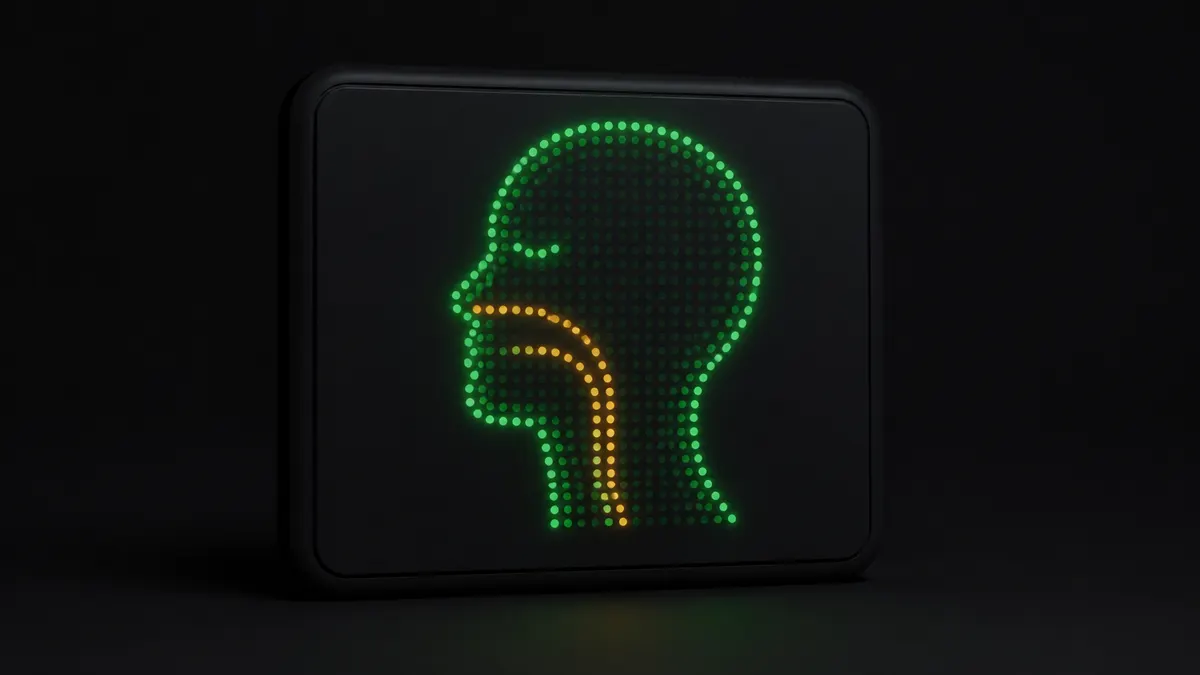
You snore because air is squeezing through a narrowed upper airway and making the relaxed tissue there vibrate, mostly the soft palate, the uvula and the back of the tongue. That is the mechanism for everyone. The useful question is what narrows your airway, and there are seven usual suspects: nose, mouth breathing, sleep position, alcohol, weight, age and hormones. Cleveland Clinic estimates 25% of adults snore regularly, and most never find out which suspect is theirs. Five recorded nights, each tagged with what you did, can.
- Snoring is the vibration of relaxed tissue, soft palate, uvula and tongue base, as air passes a narrowed airway (Mayo Clinic).
- A neck circumference over 40 cm, about 16 in, is one of the eight STOP-BANG risk items for sleep apnea (Chung et al., 2008).
- Up to about 1 in 4 women snore in the third trimester of pregnancy (Sleep Foundation).
- Alcohol before bed relaxes the throat muscles; Mayo Clinic lists it with nasal congestion and back sleeping as common triggers.
- Snorly compares nights with a tag against nights without it, in snore minutes and score, so each cause below has a measurable test (our data).
What actually happens when you snore?
Snoring is turbulence. Awake, muscles hold your throat open. Asleep, they relax, the airway narrows, and each breath pulls air through a smaller tube at higher speed. Loose tissue in the way flutters, and the flutter is the sound. Mayo Clinic names the soft palate, the uvula and the tongue as the usual flutterers.
Anything that narrows the tube or loosens the tissue makes it louder: a blocked nose, a tongue that falls back when you lie face up, muscle that alcohol has relaxed further, fat around the neck, tissue that has lost tone with age. The trick is that they overlap, and one person can have three at once.
Which of the seven causes is yours?
Work down the table. Each cause leaves a different clue on a recording and has a one-night test. Record two ordinary nights first as a baseline, then change one thing per night.
| Cause | Clue on the recording | Test night | Fix to try first |
|---|---|---|---|
| Nose | High, whistling or "ratty" snore; worse with a cold or allergies | Nasal strip or saline rinse before bed | Treat congestion, nasal strip or dilator |
| Mouth breathing | Low, flapping rumble; dry mouth in the morning | Note whether you wake with an open mouth | Clear the nose first; mouth tape only with a clear nose |
| Position | Long snoring blocks once you settle on your back; quiet on your side | Sleep on your side with a pillow behind your back | Side-sleeping aids, raise the head of the bed |
| Alcohol | Louder, longer on nights you drank; heaviest in the first half | Two dry nights, then one with your usual amount | Stop drinking a few hours before bed |
| Weight | Snoring every night regardless of tags; neck over 40 cm | No single-night test; track over weeks | Weight loss, even modest |
| Age | Started or worsened gradually in your 40s or 50s | Same as weight | Side sleeping, oral appliance |
| Hormones | Began with pregnancy or menopause | Same as weight | Same fixes, plus a word with your doctor |
The five-night plan: nights 1 and 2 as usual with everything tagged, night 3 on your side, night 4 with a nasal strip or a rinse, night 5 with no alcohol and an early dinner. Compare snore minutes and loudness labels across the five. The night that is clearly quieter names the cause.
Is it your nose?
If a cold or hay fever makes your snoring worse, your nose is at least part of the cause. A blocked nose forces mouth breathing, which drops the jaw and lets the tongue slide back, and the air that still gets through the nose whistles. Nasal snoring sounds higher and thinner than the deep palatal rumble; the sound differences are in what snoring sounds like.
A daytime check: close your mouth, press one nostril shut and breathe in through the other. If the open nostril collapses inward, or you cannot get a full breath, the nose is narrow enough to matter. Then test it for one night with a nasal strip or dilator and compare the clips with your baseline. Mayo Clinic lists nasal strips and treating congestion among the first home remedies because, when they work, they work the same night.
Do you snore with your mouth open, or closed?
Both happen, and they point to different causes. Mouth open, the snore usually comes from the soft palate flapping in the wider, drier airflow. Mouth closed, the sound is coming through the nose, or from the palate vibrating against the back of the tongue, which is why closed-mouth snoring is so often a nose problem in disguise.
The British Snoring and Sleep Apnoea Association describes a simple self-test: make a snoring noise with your mouth open, then close your mouth and try again. If you can only make the sound with your mouth open, you are likely a mouth breather at night. If the closed-mouth version works too, look at your nose and your position first.
Mouth taping can help mouth breathers, but only with a clear nose, no suspected apnea and no alcohol that evening. If you try it, measure it: a few nights without, a few with, compare the minutes.
Why do you snore on your back?
Because gravity pulls the tongue and soft palate backward into the airway when you lie face up, exactly where it is narrowest. Mayo Clinic's home-remedy list starts with "sleep on your side" for that reason. On a recording, back-sleeping snoring shows as long, steady blocks that start after you settle and stop when you roll over.
The test is one night on your side. A pillow wedged behind your back keeps you there. If the side night is clearly quieter than your baseline, position is your cause and the fix is cheap. If not, keep going; a nose or alcohol problem snores in every position.
Why do you snore when you drink?
Alcohol relaxes the muscles that hold your airway open, so the tube collapses further than on a dry night. It also deepens the first hours of sleep, which is why alcohol snoring is often loudest early and settles toward morning. Sleeping pills and sedatives do the same, and a large late meal adds pressure from below.
The test is the cleanest of all: two nights with nothing to drink and dinner three hours before bed, then one night with your usual amount. If the drinking night is louder and longer, you have your answer, and the fix is timing rather than abstinence. Mayo Clinic advises avoiding alcohol close to bedtime.
Does weight, age or hormones explain it?
These are the slow causes, and no single night tests them. Fat around the neck narrows the airway from outside, which is why STOP-BANG, the eight-question apnea screen, counts a neck over 40 cm and a BMI over 35 as risk items. Age loosens the tissue: throat muscle tone drops through the 40s and 50s, and snoring that "started for no reason" often started for this one.
Hormones matter for women in two windows: pregnancy, where the Sleep Foundation puts snoring at up to about 1 in 4 women in the third trimester, and menopause, after which women's snoring rates move closer to men's. The fixes are the same, side sleeping and a clear nose first, plus a conversation with your doctor if the snoring is loud or new.
Snoring on all five nights at the same level, whatever you tagged, points to one of these as the base layer.
Why do I snore so loud, and when is loud a problem?
Loud means the airway is very narrow, the airflow very fast, or both. Loud on its own is not dangerous, but it is the first question on STOP-BANG for a reason: "Do you snore loudly, louder than talking or loud enough to be heard through closed doors?" The other seven ask about tiredness, observed pauses, blood pressure, BMI, age, neck size and sex.
Listen to the loud clips for one pattern. Snoring that builds, stops into silence for ten seconds or more, then breaks with a gasp or a snort is the pattern NHLBI describes for obstructive sleep apnea. A phone recording can capture it; it cannot tell you whether your oxygen dropped, and only a sleep study can. If you hear it, take the clips to a doctor. The two are compared side by side in snoring vs sleep apnea.
- Record tonight as a baseline: phone face down on the nightstand, 0.5 to 1 m away, on the charger, Do Not Disturb on.
- Tag the night before you sleep: alcohol (how much, when), dinner time, congestion, back or side.
- Measure your neck at the Adam's apple; over 40 cm goes in your notes.
- Plan the next four nights: baseline again, then side sleeping, then nasal strip, then no alcohol with an early dinner.
- Change one thing per night, never two, or the comparison tells you nothing.
Hear your own snoring tonightSnorly records only when it hears snoring and plays it back in the morning. Free, no account, no night limit.
Download on the App StoreRelated questions
Why would a skinny person snore?
Because weight is one of seven causes. A narrow nose, a deviated septum, large tonsils, a set-back jaw, back sleeping and alcohol narrow the airway at any body weight. A nasal-strip night and a side-sleeping night sort out the likely ones.
Is snoring every night normal?
It is common, with Cleveland Clinic estimating 25% of adults snore regularly, but nightly snoring means something narrows your airway consistently. It is worth finding the cause, and if it is loud, or anyone has noticed pauses in your breathing, it is worth a doctor's visit.
Does snoring mean poor sleep?
Not necessarily. Light snoring without pauses often leaves sleep intact. Loud snoring tends to fragment it with brief arousals you do not remember, and snoring with breathing pauses does so far more. Snoring plus unrefreshed mornings is a reason to record and, if the pauses are there, to see a doctor.
Why do I snore some nights and not others?
Because the fast causes change nightly: alcohol, a late meal, a blocked nose, how you fell asleep. That variability is good news, since a trigger rather than a fixed narrowing is doing most of the work. Tag five nights and compare; the trigger is usually visible by the third morning.
Why do I snore all of a sudden?
Look for a recent change: a cold, new allergies, weight gain, a new medication, more evening alcohol, or a new pillow that tilts your head back. In women, pregnancy and menopause are common starting points. If nothing has changed and the snoring is loud, get it looked at.
Sources
- Mayo Clinic. Snoring: Symptoms and causes. https://www.mayoclinic.org/diseases-conditions/snoring/symptoms-causes/syc-20377694
- Mayo Clinic. Snoring: Diagnosis and treatment. https://www.mayoclinic.org/diseases-conditions/snoring/diagnosis-treatment/drc-20377701
- Cleveland Clinic (2026). Snoring. https://my.clevelandclinic.org/health/diseases/15580-snoring
- National Heart, Lung, and Blood Institute. Sleep apnea: Symptoms. https://www.nhlbi.nih.gov/health/sleep-apnea/symptoms
- Chung F et al. (2008). STOP questionnaire: a tool to screen patients for obstructive sleep apnea. Anesthesiology 108(5). http://www.stopbang.ca
- Sleep Foundation. Snoring in women. https://www.sleepfoundation.org/snoring/snoring-women
- British Snoring and Sleep Apnoea Association. What kind of snorer are you? https://britishsnoring.co.uk/why_do_i_snore/what_kind_of_snorer_are_you.php
Snorly is a snore recorder and tracker, not a medical device. It does not diagnose sleep apnea or any other condition. If you notice pauses in breathing, gasping or daytime sleepiness, talk to a doctor.