Does snoring mean deep sleep? No, and here is why

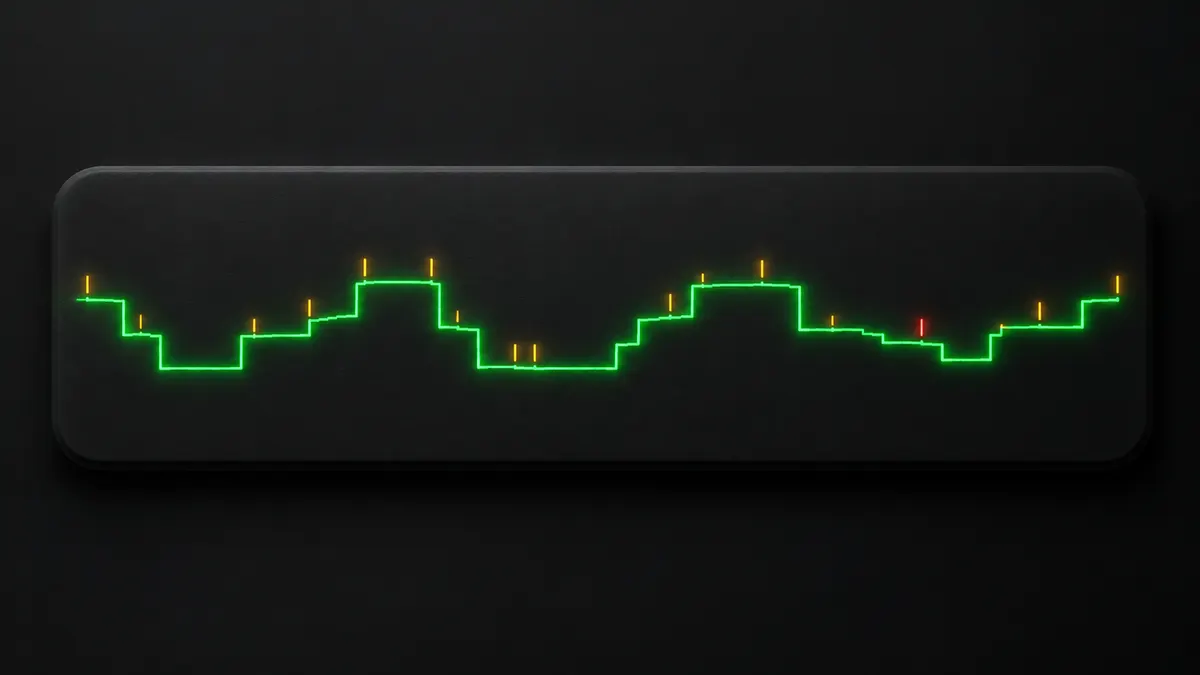
No. Snoring does happen more in deep sleep, which is where the myth comes from, but it is a sign that your airway is narrow while your muscles are relaxed, not that your sleep is good. In the Sleep Heart Health Study, 39% of people who snored six to seven nights a week were excessively sleepy by day, against 15% of never-snorers, whether or not they had sleep apnea (Gottlieb et al. 2000). Loud, nightly snoring tends to break sleep into pieces you do not remember.
- In 72 habitual snorers studied with polysomnography, snoring increased in deeper non-REM sleep and decreased in REM sleep, at the same body position (Nakano et al. 2003).
- In 14 snorers without apnea, the snoring index was highest in slow-wave sleep, the deepest stage (Sériès and Marc 1993).
- Among 5,777 adults, excessive daytime sleepiness rose from 15% of never-snorers to 39% of people snoring six to seven nights a week, independent of apnea frequency (Gottlieb et al. 2000).
- In 15 sleepy patients whose breathing effort caused brief arousals, the arousal rate fell from 31 to 8 per hour on CPAP; 10 of the 15 snored (Guilleminault et al. 1993).
- A phone recording measures sound, not brain waves. It cannot tell you which sleep stage you were in, and Snorly has no sleep-stage data of its own.
Is snoring a sign of deep sleep?
Snoring is a sign that you are asleep and that your airway is narrow, nothing more. It is true that snoring clusters in deeper sleep. In Nakano's 72 habitual snorers, snoring rose in deeper non-REM sleep and fell in REM, position held constant. Sériès and Marc found the same in 14 snorers without apnea: the snoring index peaked in slow-wave sleep.
The mistake is reading the arrow backwards. Deep sleep brings snoring in a narrow airway; snoring does not bring deep sleep. A person with a wide airway sleeps just as deeply and makes no sound. Pevernagie's review of snoring acoustics lists sleep stage alongside body position and route of breathing as things that shape snoring. The stage is an input, not the output.
Why is snoring louder in deep sleep?
Because the muscles holding your throat open relax as sleep deepens, and a narrower tube makes more turbulence per breath. Deep non-REM sleep also has slow, regular breathing, which gives the soft palate a steady airflow to flutter in: the low rumble in what snoring sounds like.
REM is the odd stage. Issa and Sullivan found the airway of 14 sleeping snorers consistently easier to close in REM than in non-REM, yet Nakano's series recorded less snoring there, because REM breathing is lighter and irregular. REM snoring tends to be broken rather than steady.
Does snoring affect sleep quality?
For nightly, loud snorers, yes, and it shows up as daytime sleepiness even when apnea is ruled out. Gottlieb and colleagues asked 5,777 adults, mean age 64, how often they snored, measured apneas with home polysomnography and scored sleepiness on the Epworth scale. The share scoring 11 or higher, the usual cutoff, climbed with snoring frequency, and adjusting for apneas did not change it.
| Share with Epworth score 11 or higher, % | Never snore | Snore 6 to 7 nights a week | Change |
|---|---|---|---|
| Daytime sleepiness | 15 | 39 | 160% |
The 39% were not sleeping deeper. They were sleeping worse. A quiet snore two nights a week is a different matter; there is no good evidence it costs you anything but a nudge from your partner.
Can snoring wake you up without you knowing?
Yes. The sleep-lab term is an arousal: an abrupt shift in brain-wave frequency lasting at least three seconds, by the American Academy of Sleep Medicine scoring rules. Most are too short to leave a memory. You do not wake up; your sleep is pushed back to a lighter stage, again and again.
Guilleminault showed where snoring fits. In 15 sleepy patients with no apnea, breathing effort rose against a partly blocked airway, an arousal followed, and the cycle restarted 31 times an hour; 10 of the 15 snored during it. On CPAP the arousals fell to 8 an hour and daytime sleep latency rose from 5 minutes to 13, from severely sleepy to normal. The snoring was the audible part of the effort.
Why do people believe snoring means deep sleep?
Because the evidence is always second-hand. The snorer remembers nothing and wakes to a partner who says "you were out cold". Heavy, relaxed sleep looks that way from outside, and snoring really is heaviest in slow-wave sleep, so the myth writes itself. It leaves out the arousals, which are silent, and the morning, which is the snorer's only witness.
When does snoring actually fragment sleep?
When it is loud, when it is nightly, and above all when it comes with pauses. Light, occasional snoring on your side usually leaves sleep intact. The pattern to listen for is snoring that builds, stops into silence for 10 seconds or more, then breaks with a gasp; NHLBI describes that pattern for obstructive sleep apnea, and it is compared clip by clip in snoring vs sleep apnea.
Snoring that arrived recently or comes and goes points to a trigger; the causes by onset speed are in why do I snore all of a sudden, the full list in why do I snore.
What can a recording tell you, and what can it not?
A phone on the nightstand can tell you whether you snore, for how many minutes, how loud, and whether the sound stops and restarts with gasps. Snorly records only when it detects snoring and lays the clips on a timeline with a loudness label from Quiet to Severe. It cannot tell you your sleep stages; those need EEG electrodes on your scalp, and no app that listens can measure them. It cannot tell you whether your oxygen dropped either.
What it can do is pair with how you feel at 9 a.m. Snoring for 90 minutes and waking refreshed is a different night from snoring for 90 minutes and needing three coffees. A week of minutes and mornings together tells you whether snoring is costing you sleep. If you sleep alone and are not sure you snore at all, start with how to know if you snore.
- Record the night: phone face down on the nightstand, 0.5 to 1 m from your head, on the charger, Do Not Disturb on.
- Rate how tired you are from 1 to 5 before bed and again at 9 a.m.
- Skip alcohol so the baseline night is an honest one.
- In the morning, listen to the loudest three clips for silences of 10 seconds or more that end in a gasp.
- Repeat for a week and line the morning scores up against snore minutes.
Hear your own snoring tonightSnorly records only when it hears snoring and plays it back in the morning. Free, no account, no night limit.
Download on the App StoreRelated questions
Is snoring a sign of good sleep?
No. Snoring is heaviest in deep sleep because relaxed throat muscles narrow the airway, but it does not make sleep deeper. In population data, nightly snorers were more than twice as likely to be excessively sleepy by day as never-snorers, apnea or not.
Do snorers sleep well?
Light, occasional snorers often do. Loud, nightly snorers often do not: brief arousals they never remember push them back to lighter sleep. The honest test is a week of recorded nights lined up against how rested you feel each morning.
Why does my own snoring wake me up?
A loud snore or a snort at the end of a breathing pause can cross from a three-second arousal into a real awakening. If it happens often, listen to the clips around those moments for silences before the snort; that pattern is worth showing a doctor.
Does snoring happen in REM sleep?
Yes, but usually less than in deep non-REM sleep. The airway is most collapsible in REM, yet breathing there is lighter and irregular, so studies record fewer and more broken snores in REM than in slow-wave sleep.
Sources
- Nakano H, Ikeda T, Hayashi M, Ohshima E, Onizuka A (2003). Effects of body position on snoring in apneic and nonapneic snorers. Sleep 26(2):169-172. https://doi.org/10.1093/sleep/26.2.169
- Sériès F, Marc I (1993). Effects of protriptyline on snoring characteristics. Chest 104(1):14-18. https://doi.org/10.1378/chest.104.1.14
- Issa FG, Sullivan CE (1984). Upper airway closing pressures in snorers. Journal of Applied Physiology 57(2):528-535. https://doi.org/10.1152/jappl.1984.57.2.528
- Pevernagie D, Aarts RM, De Meyer M (2010). The acoustics of snoring. Sleep Medicine Reviews 14(2):131-144. https://doi.org/10.1016/j.smrv.2009.06.002
- Gottlieb DJ, Yao Q, Redline S, Ali T, Mahowald MW (2000). Does snoring predict sleepiness independently of apnea and hypopnea frequency? American Journal of Respiratory and Critical Care Medicine 162(4):1512-1517. https://doi.org/10.1164/ajrccm.162.4.9911073
- Guilleminault C, Stoohs R, Clerk A, Cetel M, Maistros P (1993). A cause of excessive daytime sleepiness. The upper airway resistance syndrome. Chest 104(3):781-787. https://doi.org/10.1378/chest.104.3.781
- American Academy of Sleep Medicine. The AASM Manual for the Scoring of Sleep and Associated Events. https://aasm.org/clinical-resources/scoring-manual/
- National Heart, Lung, and Blood Institute. Sleep apnea: Symptoms. https://www.nhlbi.nih.gov/health/sleep-apnea/symptoms
Snorly is a snore recorder and tracker, not a medical device. It does not diagnose sleep apnea or any other condition. If you notice pauses in breathing, gasping or daytime sleepiness, talk to a doctor.